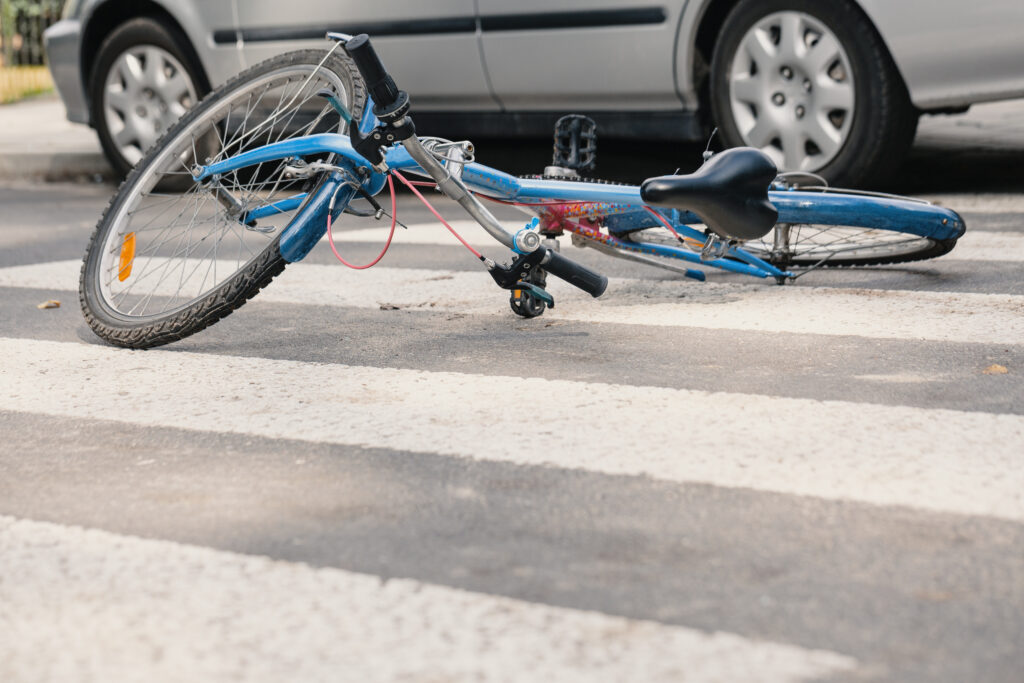
Cyclists in Lafayette are uniquely vulnerable on the road. There are no airbags, no crumple zones, and no steel frame between you and a 4,000-pound vehicle. When a driver is negligent — distracted, speeding, or simply not looking — the cyclist pays the price. If you or a family member has been hit by a vehicle while riding a bicycle in Lafayette, you have legal rights. Louisiana law allows injured cyclists to pursue compensation for medical bills, lost wages, pain and suffering, and long-term disability — regardless of whether you were in a dedicated bike lane, on a shared road, or crossing an intersection. Kenny Habetz Injury Law represents injured cyclists throughout Lafayette Parish. We know the local roads, the intersections where accidents cluster, and how insurance companies handle bicycle accident claims. We work on a contingency fee basis — you pay nothing unless we win.
Louisiana Bicycle Laws — What Cyclists and Drivers Need to Know
Louisiana law grants cyclists the same rights and responsibilities as motor vehicle drivers on public roads. Understanding these rules is important — both for knowing your rights as an injured cyclist and for establishing fault after an accident.
Cyclists Have the Right to the Road
Under Louisiana Revised Statute 32:197, bicycles are considered vehicles and cyclists have the legal right to use public roadways. Drivers are required to share the road with cyclists and must treat them with the same duty of care they owe to other motorists.
Drivers Must Maintain a Safe Passing Distance
Louisiana law requires drivers to maintain a minimum of three feet of clearance when passing a cyclist. Failure to do so is a violation of state law and constitutes negligence — which is directly relevant to fault determination in a bicycle accident claim.
Cyclists May Ride in the Roadway
Cyclists are permitted to ride on the road even where a bike lane or shared path exists. A driver cannot argue that a cyclist “should have been” in a bike lane — the law does not require it.
Helmet Laws in Louisiana
Louisiana does not require adult cyclists (age 12 and over) to wear helmets. However, cyclists under 12 are required by law to wear a helmet. The absence of a helmet does not eliminate your right to compensation — though insurance adjusters may attempt to use it to argue comparative fault. An experienced bicycle accident attorney counters this argument.
Riding Rules Cyclists Must Follow
Cyclists are required to obey traffic signals and signs, ride in the same direction as traffic, use front white lights and rear red reflectors when riding at night, and yield to pedestrians in crosswalks. If a cyclist was violating traffic rules at the time of an accident, Louisiana’s pure comparative fault system still allows recovery — but the damages may be reduced by the cyclist’s percentage of fault.
Where Bicycle Accidents Happen in Lafayette
Lafayette’s road network was largely designed around vehicle traffic, which creates specific hazard points for cyclists. The following areas and routes are associated with the highest risk for bicycle accidents in the city.
Johnston Street
One of Lafayette’s primary commercial corridors, Johnston Street runs through high-density traffic areas with multiple driveways, turning vehicles, and distracted drivers. Cyclists navigating Johnston Street face constant exposure to vehicles entering and exiting parking lots, as well as drivers making left turns across the bike path.
Ambassador Caffery Parkway
A wide, high-speed arterial road that cuts across the south side of Lafayette. The combination of fast-moving traffic, limited dedicated cycling infrastructure, and frequent commercial access points makes Ambassador Caffery one of the most dangerous roads for cyclists in the parish.
Kaliste Saloom Road
A busy mixed-use corridor connecting residential areas to commercial zones, Kaliste Saloom Road sees heavy commuter and delivery traffic. The road is used by recreational cyclists heading toward Girard Park and by commuters, creating friction with vehicle traffic particularly during morning and evening peak hours.
Pinhook Road
Pinhook Road near the Vermilion River and Girard Park area is popular with recreational cyclists due to its proximity to green space. However, it carries significant vehicle traffic, has sections with no dedicated cycling infrastructure, and the road narrows in places — creating dangerous passing conditions.
Verot School Road and the Surrey Street Corridor
The Surrey Street area and Verot School Road are used by cyclists navigating between the UL Lafayette campus and surrounding residential neighbourhoods. High pedestrian and cyclist density combined with vehicle traffic in a compressed area creates elevated accident risk, particularly during university term time.
The Bayou Vermilion District and River Ranch Area
The River Ranch development and Bayou Vermilion corridor are popular cycling destinations in Lafayette. Cyclists use these routes for recreational riding, and while traffic volumes are lower, the mix of cyclists, pedestrians, and vehicles at entry and exit points creates risk — particularly at intersections with Camellia Boulevard and Kaliste Saloom.
Shared-Use Paths and the Heron Crossing Area
Lafayette has a number of shared-use paths where cyclists and pedestrians share the same surface. Where these paths intersect with vehicle traffic — at road crossings and parking lot access points — cyclists face elevated risk from drivers who do not expect them.
Common Causes of Bicycle Accidents in Lafayette
Most bicycle accidents involving vehicles are caused by driver error, not cyclist error. The following causes are the most frequently documented in Louisiana bicycle accident cases.
Dooring
A driver or passenger opens a vehicle door into the path of an oncoming cyclist without checking their mirror. At cycling speeds, there is little or no time to react. Dooring causes serious injuries — particularly to the shoulder, collarbone, wrist, and head — and the person opening the door is almost always at fault.
Failure to Yield at Intersections
Drivers turning left across oncoming traffic frequently fail to see or yield to cyclists approaching from the opposite direction. This is one of the most common and most dangerous accident types for cyclists. The cyclist, who has the right of way, is struck at full speed by a turning vehicle.
Right Hook
A driver overtakes a cyclist and then immediately turns right, cutting off the cyclist’s path. The cyclist either collides with the turning vehicle or is forced off the road. This frequently happens at intersections and driveways along high-traffic commercial corridors like Johnston Street.
Distracted Driving
A driver using a phone, adjusting a navigation system, or otherwise not paying attention drifts into a bike lane or fails to see a cyclist at an intersection. Louisiana law prohibits texting while driving, and distracted driving constitutes negligence.
Speeding
High vehicle speeds reduce reaction time and dramatically increase the severity of injuries when a collision occurs. On roads like Ambassador Caffery Parkway and Kaliste Saloom Road, where speed limits are higher and cycling infrastructure is limited, speeding is a significant contributing factor to serious bicycle accidents.
Drunk or Impaired Driving
Alcohol and drug impairment affect judgment, reaction time, and lane control. Bicycle accidents caused by impaired drivers may involve criminal charges against the driver — and potentially punitive damages in a civil claim — in addition to the standard personal injury claim.
Unsafe Passing
Failing to maintain the legally required three-foot clearance when passing a cyclist. Drivers who clip cyclists while passing — even at low speeds — can cause the cyclist to lose control and sustain serious injuries from the fall itself.
Road Hazards
Potholes, uneven road surfaces, drain grates, debris, and poorly maintained bike lanes can cause cyclists to crash. In some cases these accidents give rise to a premises liability or government liability claim against the city or parish responsible for road maintenance.
Injuries Sustained in Lafayette Bicycle Accidents
Because cyclists have no physical protection, bicycle accident injuries tend to be significantly more severe than injuries sustained by vehicle occupants in comparable collisions. The following are the most common injury types seen in Lafayette bicycle accident cases.
Traumatic Brain Injury
Head injuries are the leading cause of serious disability and death in bicycle accidents. Even with a helmet, the force of impact with a vehicle or the ground can cause traumatic brain injury (TBI) — ranging from concussion to severe brain damage. Symptoms include memory loss, cognitive impairment, personality changes, and chronic headaches. TBI cases require expert neurological testimony and careful documentation of long-term impacts.
Spinal Cord Injury
Impact with a vehicle or the road surface can fracture vertebrae or damage the spinal cord, causing partial or complete paralysis. Spinal cord injuries are among the most catastrophically expensive injury types — requiring immediate surgical intervention, long-term rehabilitation, and often permanent modifications to home and vehicle. Compensation must account for lifetime care costs.
Broken Bones
Cyclists instinctively extend their arms to break a fall, resulting in fractured wrists, forearms, and collarbones. Direct impact with a vehicle causes rib fractures, pelvic fractures, and leg breaks. Multiple fractures are common in high-speed collisions. Some fractures require surgical repair and result in permanent reduced function.
Road Rash and Soft Tissue Injuries
When a cyclist is thrown from their bike onto asphalt, the resulting abrasion injuries — road rash — can be extensive and deeply painful. Severe road rash may require skin grafts and carries a risk of infection. Ligament and tendon damage, particularly to the knee and shoulder, frequently accompanies road rash injuries.
Internal Injuries
Impact with a vehicle can cause internal bleeding, organ damage, and abdominal trauma. These injuries may not be immediately apparent at the scene, which is one of the reasons seeking immediate medical attention after any bicycle accident — even if you feel able to walk away — is critical.
Facial Injuries and Dental Trauma
Without a full-face helmet, cyclists are exposed to facial impact injuries — fractures of the jaw, cheekbone, and orbital bones, as well as dental trauma requiring extensive reconstruction. These injuries carry both functional and aesthetic long-term consequences.
Psychological Injuries
Serious bicycle accidents frequently cause post-traumatic stress disorder (PTSD), anxiety, and a fear of cycling or road traffic that persists long after physical recovery. Psychological injuries are compensable in Louisiana personal injury claims alongside physical injuries.
How Fault Is Determined in a Lafayette Bicycle Accident Case
Louisiana uses a pure comparative fault system (Louisiana Civil Code Art. 2323). This means fault is apportioned between all parties involved, and each party’s compensation is reduced by their percentage of fault. Crucially, a cyclist can recover compensation even if they were partly at fault — their recovery is simply reduced proportionally.
How Insurance Companies Approach Bicycle Accident Fault
Insurance adjusters for the at-fault driver are trained to find ways to assign fault to the cyclist. Common arguments include:
- The cyclist was not wearing a helmet (adult cyclists are not legally required to — this argument is legally weak but may influence a jury)
- The cyclist was not visible (inadequate lighting at night, or dark clothing)
- The cyclist was riding outside the bike lane (not legally required)
- The cyclist ran a red light or stop sign
- The cyclist made an unexpected manoeuvre
None of these arguments automatically defeats a claim — but they can reduce the compensation awarded. An experienced bicycle accident lawyer anticipates these arguments and builds the evidence to counter them from the outset of the case.
Evidence Used to Establish Fault
- Police accident report — the responding officer’s observations and any citations issued.
- Traffic and security camera footage — particularly valuable on commercial corridors like Johnston Street and Ambassador Caffery.
- Witness statements — cyclists frequently have witnesses; their testimony is critical.
- Phone records — if distracted driving is suspected, subpoenaing the driver’s phone records can establish they were using their device at the time of impact.
- Vehicle black box data — commercial and newer passenger vehicles record speed and braking data in the seconds before impact.
- Medical records — documenting the nature and severity of injuries supports the mechanism of impact and establishes that the cyclist did not contribute to their own injuries through pre-existing conditions.
- Accident reconstruction expert — in serious cases, an expert can reconstruct the collision using physical evidence to establish speed, angle of impact, and fault.
What Happens When Fault Is Shared
If a jury finds the cyclist was 20% at fault and the driver was 80% at fault, and total damages are $200,000, the cyclist recovers $160,000. Kenny Habetz’s role in these cases is to minimise the cyclist’s assigned fault percentage and maximise the documented damages — both of which directly affect the final recovery.
What Compensation Is Available After a Lafayette Bicycle Accident
Injured cyclists in Louisiana may claim the following categories of compensation.
Economic Damages
- Medical expenses: all past treatment costs including emergency care, hospitalization, surgery, and rehabilitation, plus estimated future medical costs for ongoing or permanent injuries
- Lost wages: income lost during recovery, documented through pay stubs and employer confirmation
- Loss of earning capacity: if the injury permanently reduces your ability to work at your previous level, a vocational and economic expert calculates the long-term financial impact
- Bicycle repair or replacement: the cost of repairing or replacing your bicycle and any cycling equipment damaged in the accident
- Out-of-pocket expenses: transportation to medical appointments, home care, and other costs directly caused by the injury.
Non-Economic Damages
Louisiana does not cap non-economic damages in most personal injury cases, which distinguishes it from states like Texas or California.
- Pain and suffering: physical pain both at the time of the accident and during recovery
- Emotional distress: anxiety, depression, and PTSD resulting from the accident
- Loss of enjoyment of life: if the injury prevents you from cycling, exercising, or engaging in activities you previously enjoyed
- Disfigurement: scarring from road rash, surgical procedures, or facial injuries
- Loss of consortium: the impact of your injuries on your relationship with your spouse
Punitive Damages
In cases involving drunk driving, punitive damages may be available in Louisiana in addition to compensatory damages. Punitive damages are intended to punish particularly egregious conduct and deter similar behavior.
What to Do Immediately After a Bicycle Accident in Lafayette
The steps you take in the hours after a bicycle accident directly affect the strength of your legal claim.
- Call 911 — even for accidents that seem minor. A police report creates an official record of the incident, the parties involved, and the responding officer’s observations. Do not accept an offer from the driver to handle things privately without a police report.
- Seek medical attention immediately — do not wait to see if your injuries develop. Emergency room documentation creates a contemporaneous medical record that is extremely difficult for an insurance company to dispute. Delayed treatment is one of the most common arguments used to minimize compensation.
- Document the scene — photograph the vehicle, your bicycle, the road surface, any skid marks, traffic signals, and your injuries. If there are witnesses, get their names and phone numbers before they leave.
- Do not give a recorded statement to the driver’s insurance company — adjusters use recorded statements to build arguments for reducing your claim. You are not legally required to give one.
- Preserve your bicycle — do not repair it before it has been examined. A damaged bicycle is physical evidence of the force of the impact.
- Contact Kenny Habetz Injury Law — the sooner you have legal representation, the earlier evidence can be preserved. Black box data can be overwritten within 30 days. Surveillance footage is often deleted within 72 hours. Time matters.
Frequently Asked Questions
Can I still claim compensation if I wasn’t wearing a helmet?
Yes. Louisiana law does not require adult cyclists to wear helmets. The absence of a helmet may be raised by the defense as a comparative fault argument, but it does not eliminate your right to compensation. An experienced bicycle accident lawyer anticipates this argument and addresses it with medical evidence about the specific nature of your injuries.
What if the driver who hit me drove off?
If the at-fault driver fled the scene, you may still have options. Your own uninsured motorist (UM) coverage typically applies in hit-and-run situations. If you didn’t sign a written rejection of UM coverage in Louisiana, you likely have it. Kenny can review your insurance policy and advise on all available paths to compensation.
What if I was hit by a car while riding in a bike lane?
A driver who enters a marked bike lane and strikes a cyclist bears a strong presumption of fault. Bike lane markings are legally designated cycling infrastructure, and a driver’s intrusion into that space is a clear violation of their duty of care.
How long do I have to file a bicycle accident claim in Louisiana?
One year from the date of the accident, under Louisiana Civil Code Article 3492. This is one of the shortest statutes of limitations in the US. Do not wait. Evidence degrades quickly and witnesses’ memories fade. Contact a lawyer as soon as possible after the accident.
What if the accident was caused by a pothole or road defect rather than a driver?
You may have a premises liability or government liability claim against the city of Lafayette or Lafayette Parish depending on which entity is responsible for maintaining the road. These claims have additional procedural requirements — including a 90-day written notice requirement before filing suit against a government entity — which makes early legal advice particularly important.
Can I claim for my bicycle as well as my injuries?
Yes. Property damage — the cost of repairing or replacing your bicycle and any damaged equipment — is recoverable as part of your economic damages claim.
Bicycle accidents can change your life in an instant. If you’ve been hit by a vehicle while cycling in Lafayette, you deserve a lawyer who will take your case seriously — investigate thoroughly, push back on insurance tactics, and fight for every dollar you’re owed. Kenny Habetz Injury Law offers free, no-obligation consultations for injured cyclists in Lafayette Parish. No fee unless we win.